
"subtropical plants"
1000 article(s) found

What's the flavor of St. Helena's coffee? What kind of coffee is grown in St. Helena Coffee?
Professional coffee knowledge exchange more coffee bean information please follow the coffee workshop (Wechat official account cafe_style) where is St. Helena Island? On an island of only 47 square miles south-west of Africa at 16 degrees south longitude and 5 degrees west longitude, St. Helena coffee dates back to 1733 when it was brought into seed cultivation by the British East India Company and was evicted by Napoleon's defeat.

Introduction to the characteristics of flavor and taste of Alishan Mazu coffee
How much is the price of Alishan coffee? the flavor characteristics of Alishan coffee introduce that all the varieties of Alishan coffee are Arabica coffee. This kind of coffee grows in a more harsh environment. Taiwan is located in the subtropics, with high temperatures all the year round, and coffee trees like shade. If coffee trees are planted alone, they may be killed by the strong sun. The Ali Mountains are covered with forests and betel nut trees, so his

Guatemalan Coffee beans | Guatemala Coffee Aurora Manor washing Kaddura
Professional Coffee knowledge Exchange more coffee bean information Please follow the coffee workshop (official Wechat account cafe_style) Front Street-Guatemala Aurora Manor Coffee brief introduction Koban Rain Forest (Rainforest Coban) is located in the central region of Guatemala, it is one of the eight major coffee producing areas in Guatemala, and the coffee from the Koban area is significantly different from other producing areas in Guatemala. The area
Coffee bean planting coffee bean seed coffee raw bean price Indonesia Sumatra Aceh province 19 items
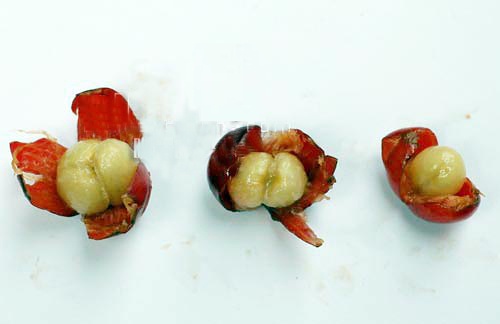
Coffee seeds cannot be grown directly with coffee fruits picked from coffee trees. Peeling coffee fruits is like planting peanuts. If you plant a peanut with a shell in the soil, it cannot sprout. You must plant peanuts. It is the same with medium coffee. If you have coffee fruit in your hand, you can first bask it in the sun and shake it until it is shaken inside.

Where is the best place to grow coffee trees? where is the best place to grow coffee?
In botany, coffee trees belong to the evergreen trees of the subgenus Rubiaceae, and coffee beans, commonly known as coffee beans, are actually the seeds of the fruit of coffee trees, just because they are shaped like beans, so they are called coffee beans. Climate is the decisive factor for coffee cultivation. Coffee trees are only suitable for growing in the tropics or subtropics, so the zone between latitude 25 degrees south and north is the most suitable for growing coffee. And this...

Introduction to coffee tree knowledge
The coffee tree is native to Ethiopia in Africa. Coffee tree in botany, belongs to the Rubiaceae coffee subgenus evergreen tree, and generally known as coffee beans, in fact, coffee tree fruit seeds, only because of the shape like beans, so called coffee beans. Climate is the decisive factor for coffee cultivation. Coffee trees are only suitable for growing in the tropics or subtropics, so latitude 25 degrees north and south.

Processing of coffee fruit
Coffee is the fruit of a Rubiaceae plant growing about 6000 feet above sea level, distributed on the world's narrow subtropical axis; coffee trees grow green all the year round and can grow up to 20 feet tall, and are generally controlled at 8 to 10 feet for easy harvest. It takes three to five years for the coffee tree to bear fruit. First of all, it produces small white flowers that resemble jasmine in shape and size, and then wither and bear deep fruit.

Introduction to the price and taste of Liberian coffee beans
Liberica coffee, which usually grows on slopes about 200 meters above sea level, is not big, about 10 to 20 feet high. Lilika coffee is a kind of tree species with strong resistance to disease and environmental adaptability, so Liberica coffee can be grown in subtropics compared with other tree species. The most suitable temperature for growth is 19-27 ℃. Liberica coffee tree from the outside, it
The growing environment of coffee trees evergreen trees of the subgenus Rubiaceae
The formation environment of coffee trees in botany, coffee trees belong to the evergreen trees of the subgenus Rubiaceae, and coffee beans, commonly known as coffee beans, are actually the seeds of the fruit of coffee trees, just because they are shaped like beans, so they are called coffee beans. Climate is the decisive factor for coffee cultivation. Coffee trees are only suitable for growing in the tropics or subtropics, so the zone between latitude 25 degrees south and north is generally called
Common sense of coffee tree
The origin of the coffee tree is Ethiopia in Africa. In botany, coffee trees belong to the evergreen trees of the subgenus Rubiaceae, and coffee beans, commonly known as coffee beans, are actually the seeds of the fruit of coffee trees. They are called coffee beans only because they are shaped like beans. Climate is the decisive factor for coffee cultivation. Coffee trees are only suitable for growing in the tropics or subtropics, so latitude 25 degrees south and north.

What are the young leaves of a coffee tree like?
In 1884, Taiwan Province began to introduce coffee. At the beginning of the 20th century, overseas Chinese brought coffee back from Malaysia to grow in Hainan Province. Later, tropical and subtropical provinces in the south began to grow plant coffee one after another. Although the cultivation time is short, the coffee from Hainan and Yunnan provinces in China has excellent quality and unique charm, and enjoys a high reputation in the world. After some foreign businessmen buy it at a low price.

The planting method of Coffee Tree the planting environment of coffee tree introduces what kind of environment is most suitable for growing coffee
Coffee fruit contains two seeds, namely coffee beans. The two beans are connected face to face with each other on one side of the plane. Each coffee bean has a thin outer film, which is called silver skin, and its outer layer is covered with a yellow outer skin, called endocarp. The whole coffee bean is wrapped in a sticky pulp to form coffee pulp, which is soft and sweet.

The respective expressions and questions of the introduction years of Zhukula Coffee in Chinese Coffee Culture
1.1 I remember that it was still the spring of 1995, when Professor Mao Genhai of the former South China Hot farming Academy and I went to Xishuangbanna, Yunnan Province. I had the honor to see Huang Junxiong and Zhang Xingcan, Institute of Tropical and Subtropical Coffee, Yunnan Academy of Agricultural Sciences, published a paper on the development of Yunnan coffee in 1994 in the third issue of Tropical crop Science and Technology, from which we got the information about the earliest introduction of Yunnan coffee.

How do coffee beans grow?-the origin of Kopi Luwak
How do coffee beans grow-the origin of Kopi Luwak in the early 20th century, overseas Chinese brought coffee back from Malaysia to grow in Hainan Province. Later, tropical and subtropical provinces in the south began to grow plant coffee one after another. Although it has been cultivated for a short time, coffee from Hainan and Yunnan provinces in China has excellent quality and unique charm, and enjoys a high reputation in the world, and some foreign businessmen

A brief introduction to the description of flavor and flavor characteristics of Simao coffee beans in Yunnan coffee producing area with moderate acidity
Simao area of Yunnan Province is between 1000 and 2000 meters above sea level, with mountains and slopes as the main terrain, fertile soil, sufficient sunshine, rich rainfall and large temperature difference between day and night, which is not only the paradise for Arabica planting, but also the key to the production of high-quality Arabica coffee beans. Simao area spans subtropical and tropical climatic zones. The climate is relatively dry and hot, with many dry and hot valleys and barren mountains, which is very suitable.
Harvest and processing of Fine Coffee
Coffee is the fruit of a Rubiaceae plant growing about 6000 feet above sea level, distributed on the world's narrow subtropical axis; coffee trees grow green all the year round and can grow up to 20 feet tall, and are generally controlled at 8 to 10 feet for easy harvest. It takes three to five years for the coffee tree to bear fruit. First of all, it produces small white flowers that resemble jasmine in shape and size, and then wither and bear deep fruit.

Are Cuban coffee beans expensive? Characteristics and flavors of Cuban Coffee
For information, please follow the coffee workshop (Wechat official account cafe_style). In 1748, coffee was introduced to Cuba and quickly became a habit and a daily life with deep social and cultural connotations. Cuba has a fertile land, a subtropical climate, a humid climate and abundant Rain Water, with mountains between 350m and 750m above sea level and an average temperature of 23-28 degrees.

Varieties of coffee harvested and processed
Coffee is the fruit of a Rubiaceae plant growing about 6000 feet above sea level, distributed on the world's narrow subtropical axis; coffee trees grow green all the year round and can grow up to 20 feet tall, and are generally controlled at 8 to 10 feet for easy harvest. It takes three to five years for the coffee tree to bear fruit. First of all, it produces small white flowers that resemble jasmine in shape and size, and then wither and bear deep fruit.

How long does it take for coffee trees to blossom to mature coffee berries?
How long does it take for coffee trees to blossom to mature coffee berries? Therefore, it presents different fragrant, dry, mellow, bitter and sour tastes. A master baker must have the temperament of an artist and the rigor of a scientist. Only in this way can we ensure that the sugars and other carbohydrates contained in the coffee are carbonized during the baking process, thus producing the well-known coffee oil and producing high quality.

Yunnan Coffee good Baoshan Xinzhai Coffee Price Yunnan Baoshan Xinzhai Coffee
Professional coffee knowledge exchange more information about coffee beans Please follow the coffee workshop (official Wechat account cafe_style) Coffee was first planted in Taiwan Province of China in 1884. In the mainland, the earliest coffee cultivation began in Yunnan. In 1892, French missionaries successfully planted the first coffee plant in a place called Zhu Kula in Binchuan, Yunnan, to meet the need of drinking coffee.